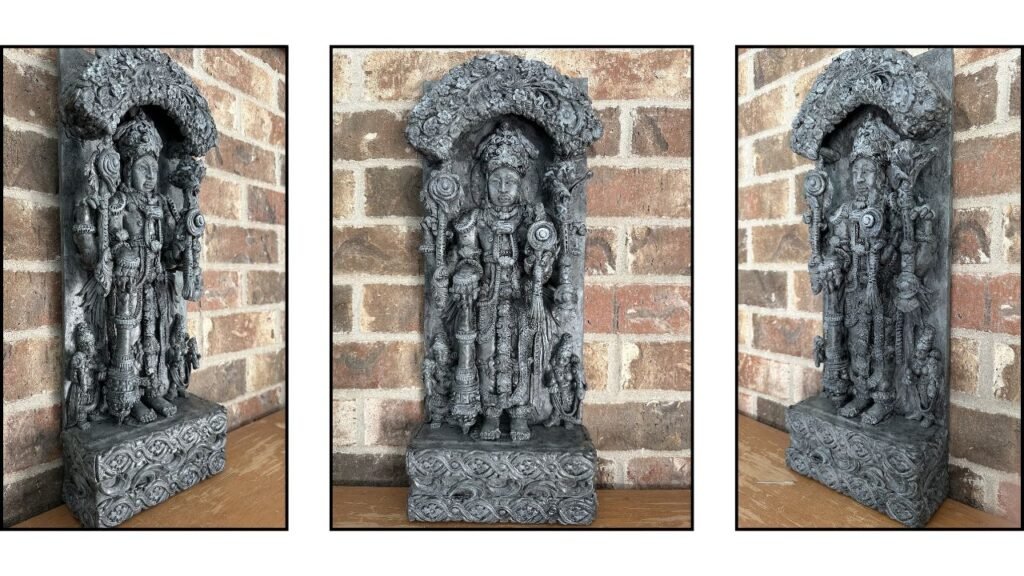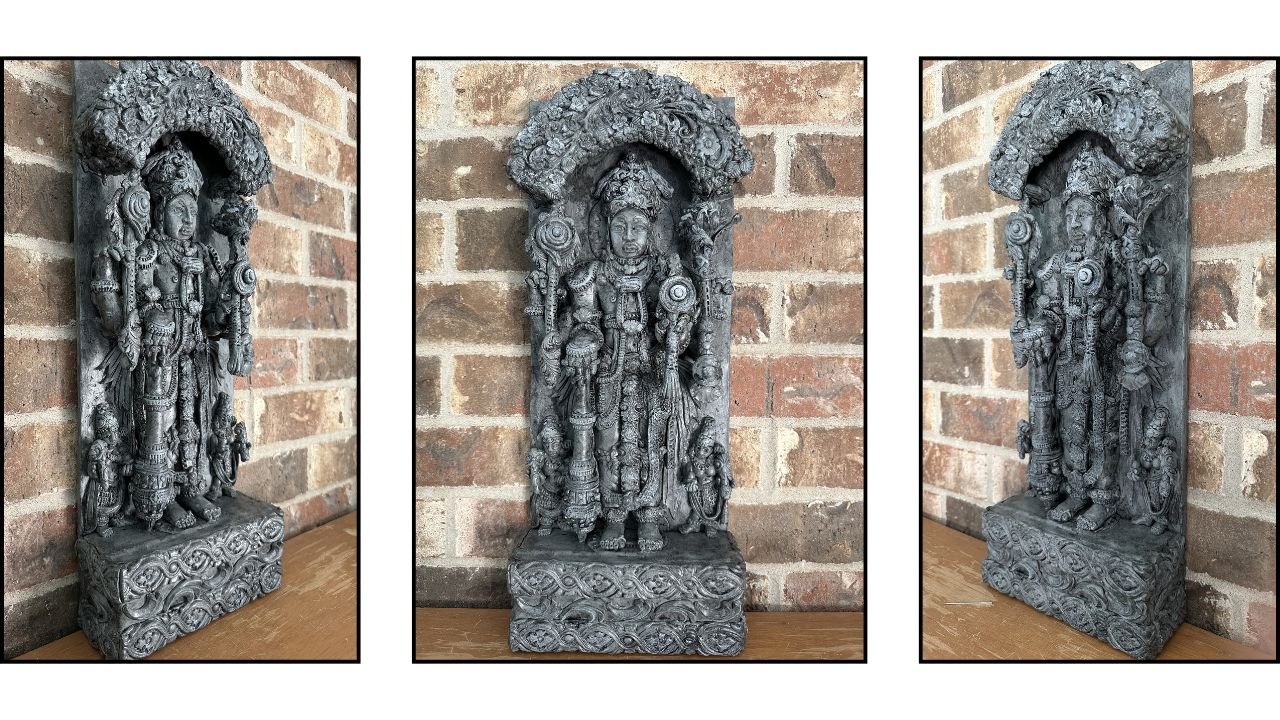
Inspiration Behind This Sculpture
I was born and raised in India, a country renowned for its rich heritage and deep cultural roots. Across its many states stand extraordinary architectural wonders that reflect centuries of artistry and devotion. I have visited the Ajanta and Ellora Caves, where breathtaking sculptures and architecture are carved directly into rock. Standing before these magnificent creations, I often wondered how the artisans of that time achieved such grand masterpieces with the tools they had. Generations of skilled craftsmen devoted their lives to creating these marvels.
Many of these historic sites have been recognized as UNESCO World Heritage Sites.
During my visits to Ajanta and Ellora, I often found myself wishing I could have lived in that era and witnessed such artistic dedication firsthand. That feeling stayed with me for years.
One day, I decided to learn relief sculpture myself. I watched the few videos available online and began experimenting on my own. To my surprise, with practice I gradually understood how to create the raised relief effect.
I strongly believe in the power of self-teaching and human determination. When people truly want to learn something, they often find a way.
I have been working on my craft for several years now. I know I can never match the skill of the great 12th-century master carvers, but I can continue improving, learning, and refining my own abilities.
Over time, I discovered many ancient Indian cave temples and created at least twenty sculptures inspired by them. Now I hope to visit as many of these incredible places as I can someday, if fortune allows.
History Of Chennakeshawa Temple And Name Of The Diety
The sculpture of Diety Vishnu is found in Chennakeshawa temple in Belur, in the state of Karnataka in India. In the 12th century the temple was built by a king named Vishnuvardhana of hoysala Dynasty to declare a victory against Chole dynasty. This temple is known for its intricate carvings. Although main structure of the temple was consecrated during Vishnuvardhana’s reign, it took 103 years for this temple to be fully carved and finished.
The stone used to create this temple was called soapstone which is easy to carve (for them) and hardens overtime when exposed to air. That is the reason why these sculptures are still standing.
Chennakeshawa temple has been recognised for its outstanding universal value and has been declared as a UNESCO World Heritage Site.
How I made This Sculpture
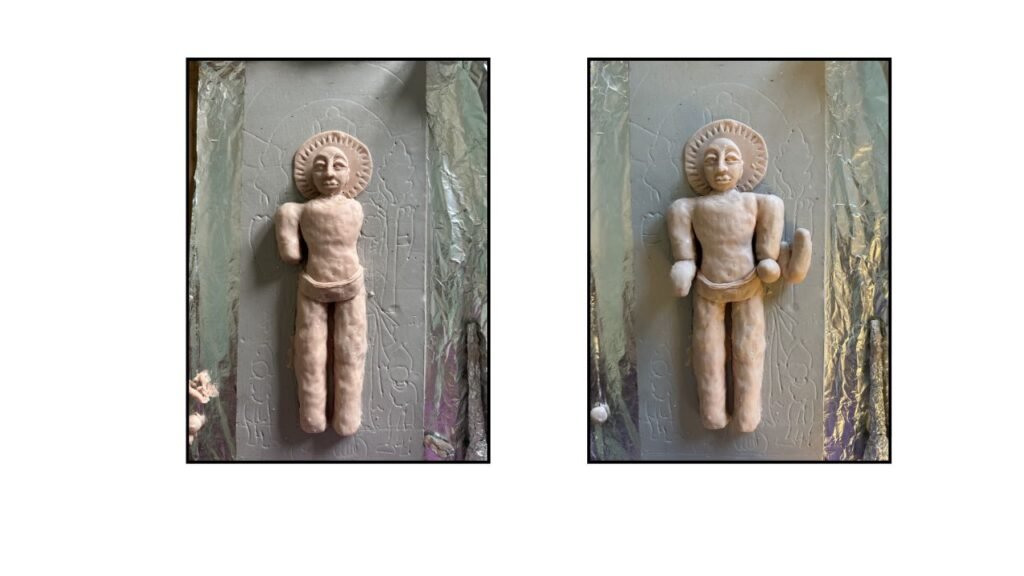
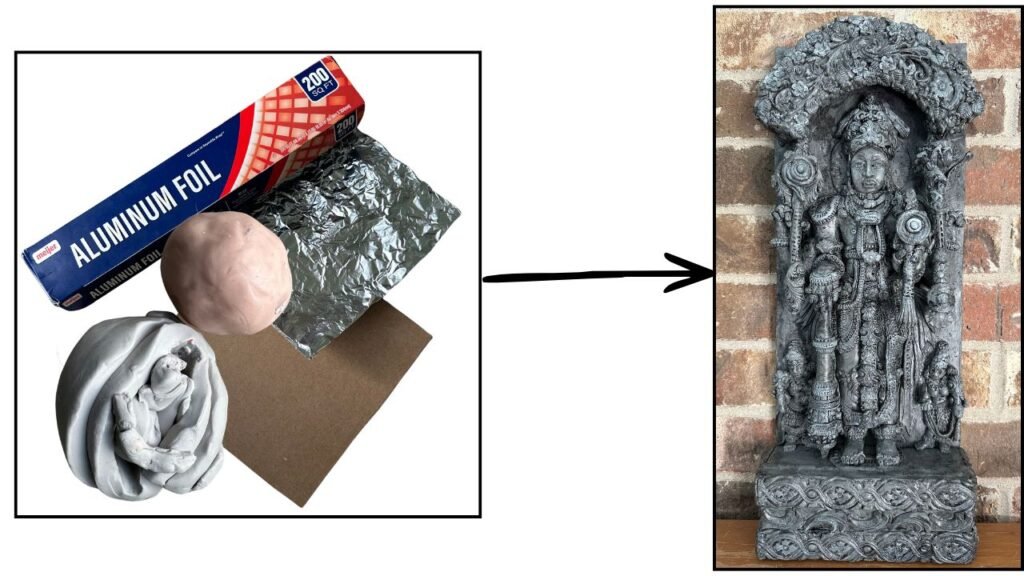
To create this sculpture, I used Sculpey Medium polymer clay as the primary base material, mixed with Super Sculpey and Sculpey Original to achieve a more workable consistency.
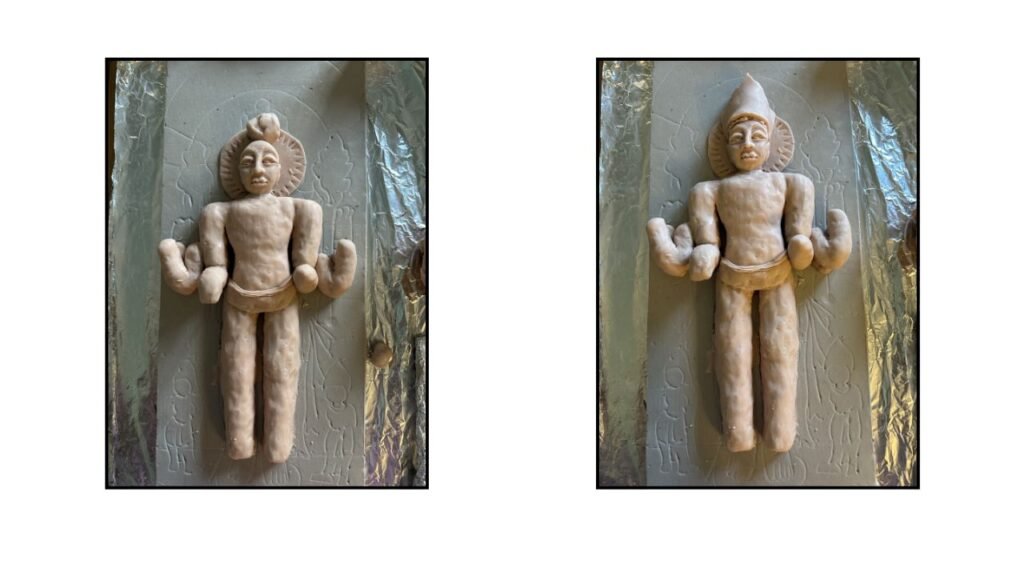
An internal armature made from aluminum foil provided strength and support. I also used cardboard for the pedestal and canopy, which helped reduce the amount of clay required while keeping the overall weight of the sculpture low.
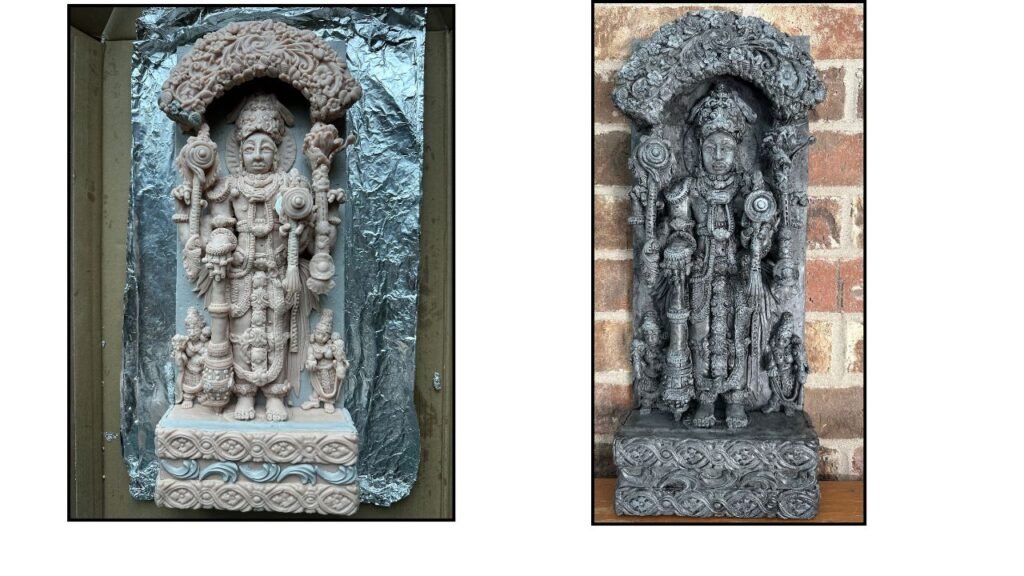
The finished sculpture measures 18 inches by 7 inches and weighs 4pounds and 10 Oz. It stands upright securely. For those who wish to use it as a devotional image for worship, it can also serve that purpose.
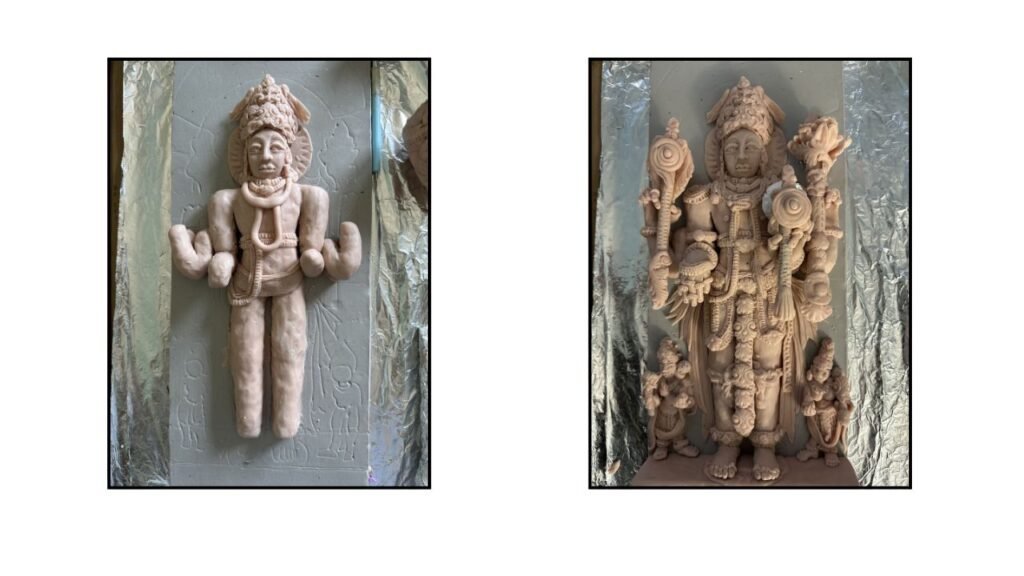
To create the intricate jewelry details, I used sculpting tools designed for fine clay work. For the decorative canopy and pedestal, I used silicone molds to add ornamental patterns and embellishments.
I didn’t get this sculpture to my satisfaction (acceptable) I have to break it 4 times and start over.
After sculpting part was over I baked it for and hour and 45 minutes. After the sculpture cooled, I painted it using acrylic paints in layers to achieve an aged stone appearance, inspired by the weathered surfaces of historic temple carvings.
Below, I have included a few photos to give you an idea of my creative process and how the sculpture came together.